Several training sessions
Do you know how to treat a medical emergency while in the backcountry? How would you handle a sprain, or worse, a broken bone?
While most backcountry injuries consist of a bad blister, I’ve witnessed several medical emergencies in the mountains. When I was backcountry skiing at a remote hut, a guy crashed and dislocated his shoulder. That was a helicopter ride out. Another time at a remote summer mountaineering camp, I recognized that one of my buddies was looking a bit too pale. Turned out, he was coughing up blood and wasn’t telling anyone. He was evacuated down to Golden. Just being at the lower elevation was enough to deal with his issues.
I’ve also dealt first hand with some scary situations. While doing a ski tour at Lake Louise resort, one of the guests broke her leg below the knee. Thankfully I had a team of Ski Friends with me, and I sent them down with the other guests to call for Ski Patrol. She was a screamer. I will never forget listening to her holler as the Pros loaded her up into the bucket. She screamed even louder when her ski boot came off…. Major kudos to those medics. They taught me to work through the screams. If something needs to be done, put cotton in your ears and do the work.
I had a scary and random accident with a good friend while cross-country skiing. I wrote about it, but never published the story. Maybe I will after this.
My point is – accidents happen! When you are all alone in the backcountry, it’s essential that you know what to do. It’s equally important to know what you cannot do. It’s also very important to know when to call in Search and Rescue (and when not to).

Remote / Wilderness First Aid
The name of this course has changed, but essentially in Western Canada there is a progression of remote first aid courses. This is the first level, and takes 20 hours. This usually consists of a Friday night session, then all day Saturday and Sunday. After this, I believe there is a 40 hour course, and then the really big 80 hour course. This final course is for professional guides, but anyone can take it. If you’re doing remote objectives with no hope of rescue, then by all means – educate yourself.

The certification lasts for two years, and I’ve taken the 20 hour course several times to keep up my credentials. Each time I take it, I learn a little bit more, or am able to retain more information. Thankfully, I’ve never been in a life or death situation, however what this course has given me is the knowledge and ability to react in a calm and reasonable fashion while the medical emergency is unfolding.
Who should take Remote First Aid?
Anyone and everyone who hikes, climbs, skis, or cycles in the mountains or other remote locations. This definitely includes men. What I’ve noticed about who attends these classes, is that it’s mainly women. Considering that guys – being stereotypical here – are a bit less concerned with personal safety, they should really know how to help their buddy who just took a header.
Remote First Aid Overview
The Friday night is all about basic first aid skills, like CPR. These skills are good for every day life, and this alone is worth the price of the course.

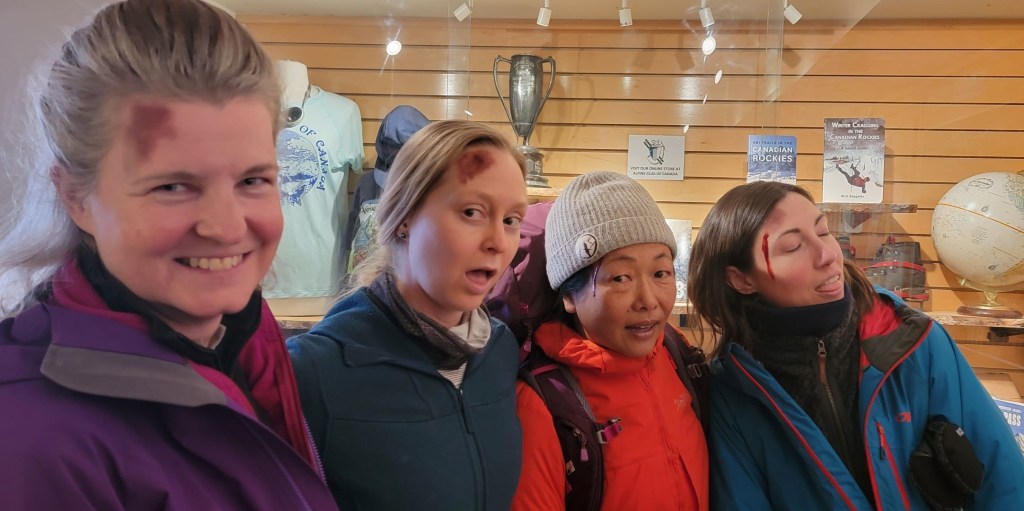
The Saturday and Sunday are spent learning about medical conditions, and how to treat various emergency situations. We then run several mock medical emergency scenarios.
I won’t go through it all, but we learned how to treat burns, sprains, broken bones, and the like. We also learned about strokes and heart attacks, and to look for / ask the patient for specific medications they may have on them.
We even covered how to inject someone with their epinephrine autoinjector (epi pen) in case of a severe allergic reaction. I’ve never really played with one before, and realized that without this training, I would have probably wasted the dose by not using it properly. Considering I recreate with someone with extreme allergies… again, a very useful course.
Some other topics covered dealing with diabetics, and recognizing the signs of a bonk.
One of the most useful training was how to deal with a suspected head or spinal injury. Hiking/scrambling/skiing/cycling in the mountains, head and spinal injuries are not uncommon. Do you know how to stabilize someone with a suspected head injury? My friend Susan took the first aid course with me many years ago. Recently, she was out riding her horse when her friend was bucked off. Susan jumped into action. She knew to not move him, and to stabilize his head. She also directed the others to get help. The paramedics gave her major props for doing the right things.

Where to take the training?
While there are several companies providing this service, I’ve taken the Remote First Aid course through Rocky Mountain Adventure Medicine twice. I like their instructors, and they are quite knowledgeable with real world medical emergency experience.
I would also recommend joining the Alpine Club of Canada. Many of the sections, including Rocky Mountain and Calgary, offer the Remote First Aid course. This allows you to take the training with like-minded people, and even find a few adventure buddies.
Sooo… Have I convinced you to take the plunge and sign up for a first aid course? They are fun, good for two years, and provide some peace of mind for you and your adventure buddies.
Thanks for reading! You can follow my blog, join my FaceBook page Al’s Adventurers, or follow me on Instagram
Alisen

I love all things mountains! I live next door to the Canadian Rocky Mountains, however I travel the world to enjoy the many different mountain environments and cultures that I can. I hope you enjoy these trip reports, and that it inspires you to accomplish your own adventure goals.

 Alisen Dopf
I always hike with a first aid kit and have taken basic first aid training – but that was several years ago. This is a good reminder that I should probably be more prepared and could benefit from taking a remote first aid course, especially since we have our little one with us now.
Don’t feel bad! I actually can’t believe all the stuff we did when our kids were little, and we had ZERO training. We got pretty lucky.