March 28-29, 2026
This is my third major ski traverse with Mike, Callum and Brian. On the two previous trips (Bow to Yoho Traverse, and the Bonnington Traverse), we had difficult snow conditions. Both trips had copious amounts of snowfall (way more than forecast), and low to no visibility. We had to alter our routes on both trips to avoid nasty avalanche routes. Why did I think we’d get lucky on this third trip??? Will I ever learn? 🙂
The first obstacle was flying stand-by from Calgary to Vancouver. Usually not an issue with 10 flights per day, but Calgary had a major snowstorm the day before we flew, and all the flights were ridiculously backed up and full. Mike and I got through on the second flight of the day, but Callum was stuck. Several hours later, Callum flew to Edmonton, and then to Vancouver. So instead of spending a leisurely day in Squamish, calmly packing our gear and mulling over the route, we pulled into Squamish close to 10:00 pm, exhausted. Not a great start.
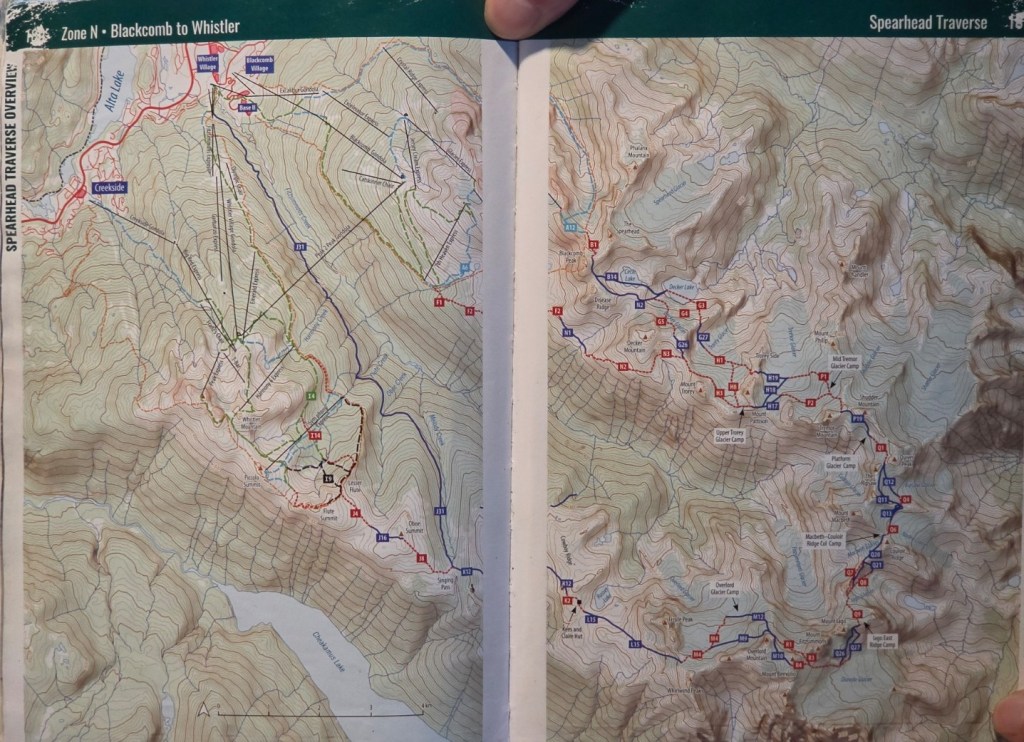
The Spearhead Traverse covers 11 glaciers and weaves around 17 peaks. The total route is 34 km, with about 1,700 m of elevation gain spread out over numerous ups and downs. Our Spearhead Traverse plan was to start early, ski half-way, and find a good spot on the glacier to spend the night. All the while enjoying beautiful blue skies and calm winds. On Day Two, we would traverse over to the Kees and Claire Memorial Hut, located at Russet Lake. We would spend two nights there, and maybe bag a summit. Then we would get up early to enjoy a lovely ski down to Whistler on Day Four. Yeah right…
Conditions were not ideal. When organizing a trip like this, we book the huts, book the flights, and take time off work weeks in advance. Then pray we have a good weather window. Various reports showed light winds. Lies! Day One was constant high winds, with gusts that almost knocked me and my big pack over. I had to hold on tight several times. Doing a big ski traverse in high winds is exhausting, and stopping is horrible because the wind sucks out the heat in a few seconds.
Avalanche conditions were favourable (Con, Mod, Mod), but we knew there were several big cornices to ski under. As this wasn’t a particularly heavy snow year, crevasses on the glaciers might be an issue. This would alter some of our routes to avoid the worst of them.
Day Two was a disaster. We knew light snow was predicted, but we awoke to a blizzard, and heard bombing at the resort. A heavy fog had clamped down, with visibility at less than 5 m. Navigation was almost impossible. Read on to hear all about it.
Watch the video here:
Gear
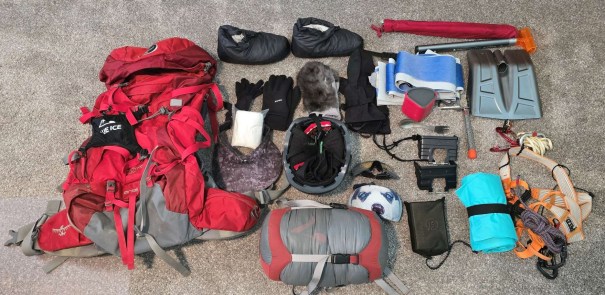
Full backcountry skiing kit, full backpacking kit, glacier gear and harness, and rope. Food for several days.
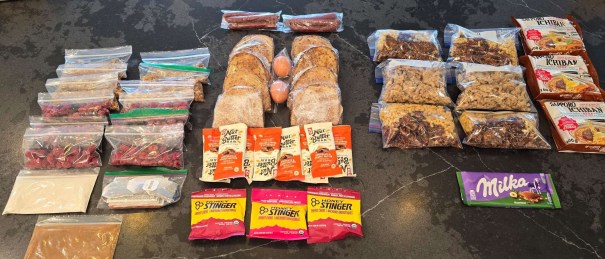
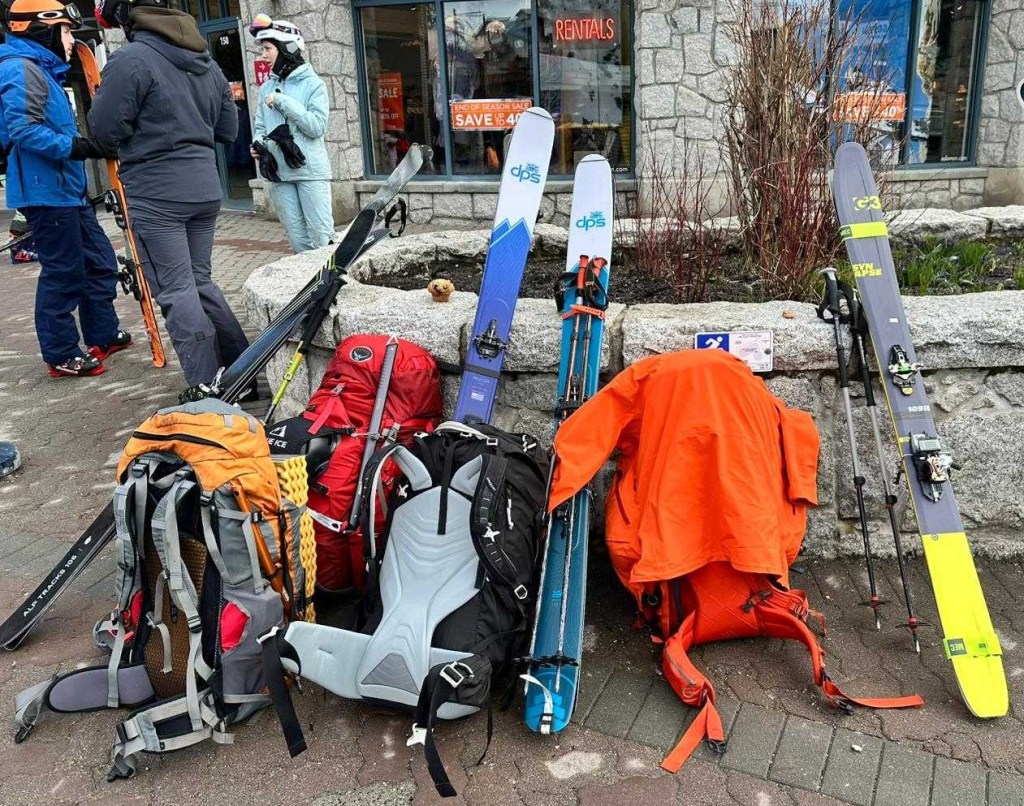
Backcountry skiing already requires a lot of gear. Adding in a tent, sleeping bags, sleeping pads, stove, fuel, pots, and utensils made our packs big and heavy. Breakfasts and dinners were homemade dehydrated meals, but lunches and snacks were bars, sandwiches, and nuts. All good stuff, but heavy.
Totals – Downloadable Tracks on Gaia, Displayed on Strava
Date: March 28th, 2026
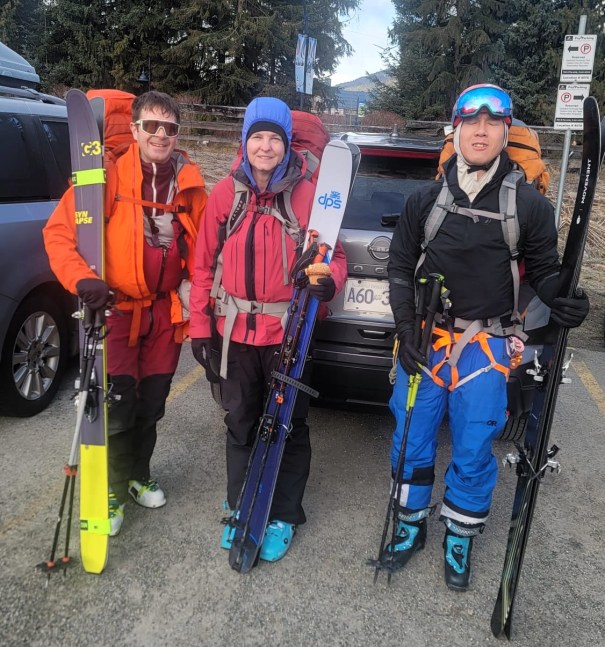
Group: Four (Alisen, Mike, Callum and Brian)
Distance: 10.4 km
Elevation: 1,288 m
Time: 7 hours 30 minutes (includes lunch and breaks)


Parking and Trail Head
There is designated overnight parking at the Blackcomb Lot 4. Then it’s a hearty walk over to the main Village, carrying our packs and skis. We purchased special Backcountry lift tickets, and signed the waiver.
Spearhead Ski Route Day One
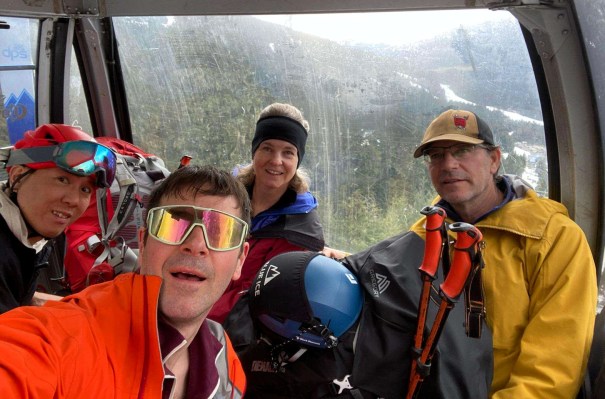
From the Village base, we rode the Blackcomb gondola, then a chairlift, and finally a T bar. There was a short boot pack above the T bar, just to get the heart pumping. At the top, we skied a sketchy entrance to traverse across to the base of the Blackcomb Glacier.
I will detail the traverse in terms of Transitions, as this is the natural stop/start point of each section. It is also to point out how much time and energy each transition eats up. Dropping the heavy pack, swapping skins, eating a small snack and drinking some water, all takes time. Then heaving that pack back on… It’s a lot. Compared to the Wapta Traverse or the Bow-Yoho Traverse, there is a LOT of time-wasting and energy sapping transitions on this traverse.
Transition #1 was putting on the skins to climb up the right high route on Blackcomb Glacier, under Blackcomb Peak. This was an icy mess, and I seriously considered putting on the ski crampons. Some dude going up the lower Spearhead side lost traction, lost both skis, and tumbled down the glacier. 15 minutes later, he was joined by a buddy, but was still not up or moving.
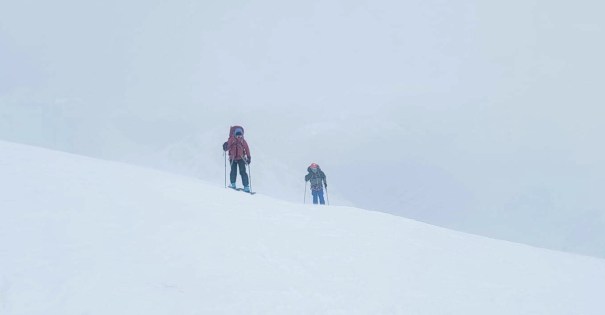
Transition #2 was ripping skins, for a long ski down to Decker Lake. This lake must be absolutely gorgeous in the summer, surrounded by towering granite peaks. Along the way, we had to ski under several large and juicy cornices. The only mitigation is to ski fast, ski one at a time, and don’t hang out under these.
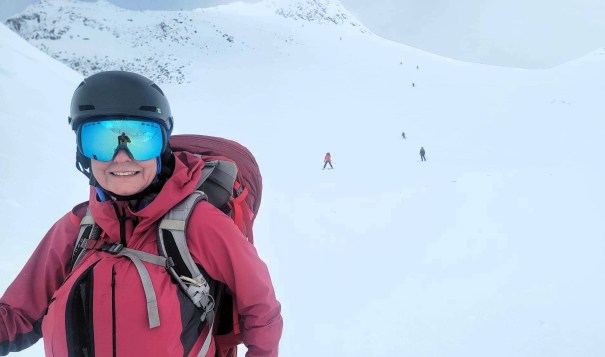
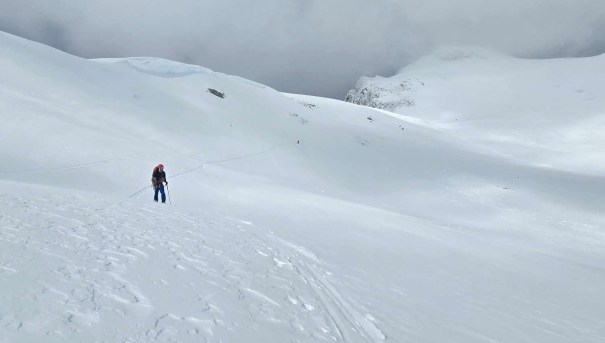
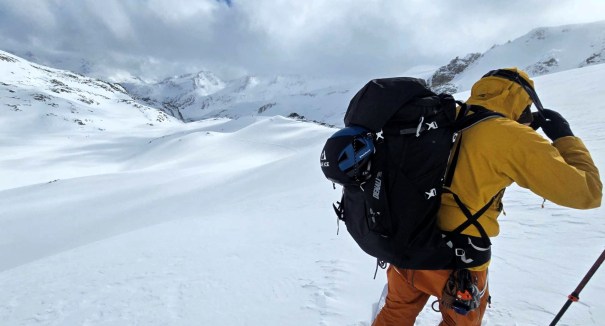
Transition #3 was skinning up to the Decker shoulder. This was a short shot, but challenging. The skin track was fairly steep, with several convoluted features to avoid. Along the way, we met a guy from the Czech Republic. He had done the Spearhead in 2020, but had to ski up from the BASE because the resort was closed. Good lord.
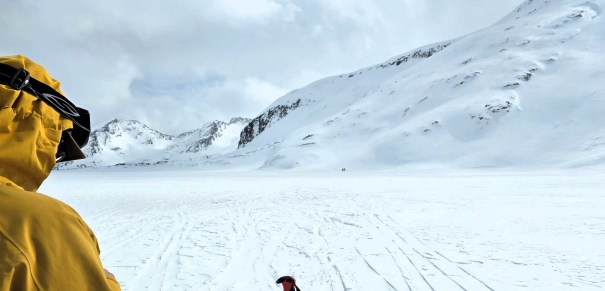
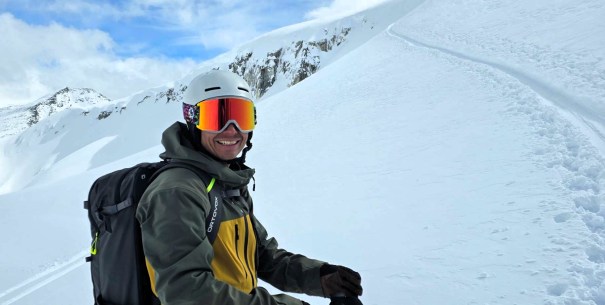
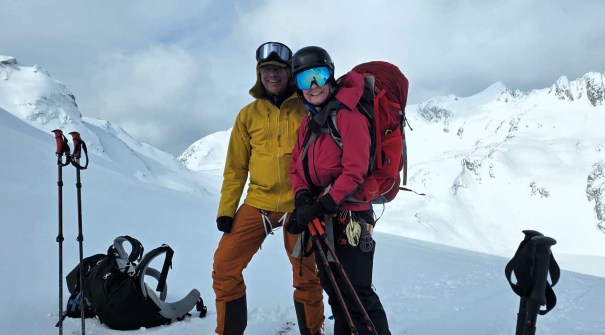
It was here on the shoulder that I realized how slow we were moving. I am used to skiing with a day pack. This giant pack and endless transitions takes longer than expected. Looking across the Trorey Glacier towards Mount Pattison, we saw another Spearhead group. They were just about at the boot pack. It is always a good idea to discuss progress, and come up with a Plan B if needed.
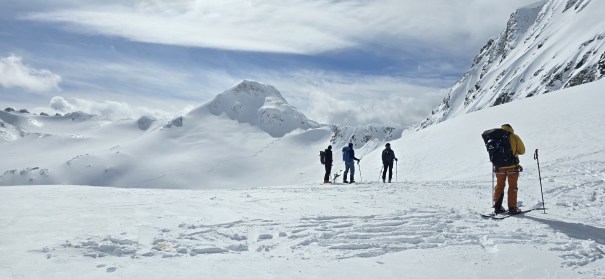
It’s almost impossible to see, but to the left of the peak are several skiers on the Trorey Glacier. They are at the base of the snow ridge, just below the Pattison bootpack.
Transition #4 was ripping skins to ski down a short couloir, and then a good ski down to the Trorey Glacier. We needed some lunch, and found a spot somewhat out of the wind. Good enough to eat and not completely freeze. All around us were day skiers ripping up the slopes. What fun!
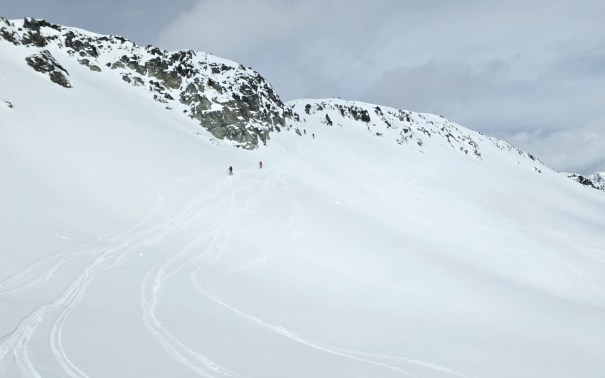
Transition #5 was putting the skins back on, and trudging up and across the Trorey Glacier, towards the Pattison Col. Brian was carrying the rope, and was getting burnt out. Callum took the rope, and Mike took the extra pot, stove and Brian’s food bag. That slowed down Mike a bit, and helped keep the group together. Callum was bragging about his bike racing, and how he was keeping up with the young 20 year olds. He had no problem carrying the rope.
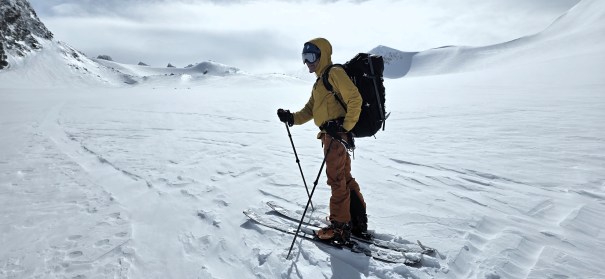
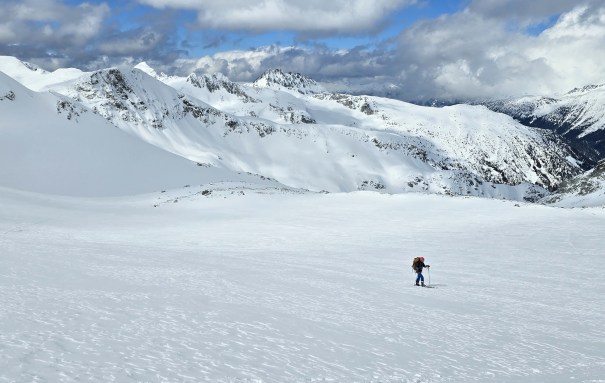
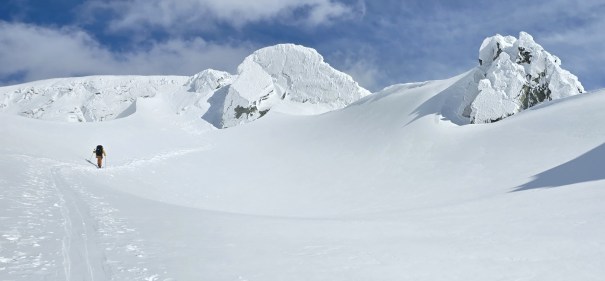
At the Mount Pattison Col, we hit the first boot pack of the traverse (I guess the one above the T Bar doesn’t count). We strapped the skis to our packs, and brought out the ice axe for the near vertical wall of snow and ice. This was fairly short, but many of the steps were shallow. It required confidence to make a move, and trust that my boot would hold when I stood up on it. A slip would hurt. A lot.
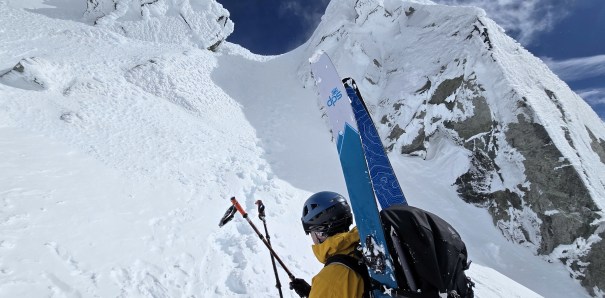
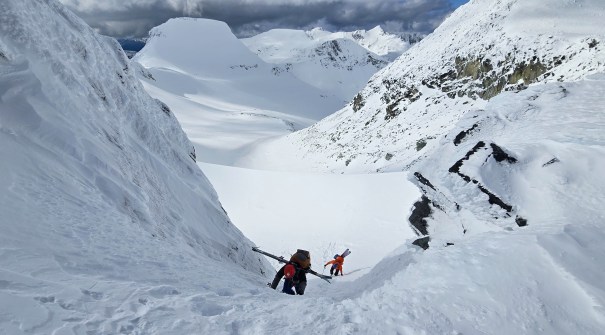
These photos that Mike took of Alisen, Brian and Callum topping out show the three different ways to pack your skis.
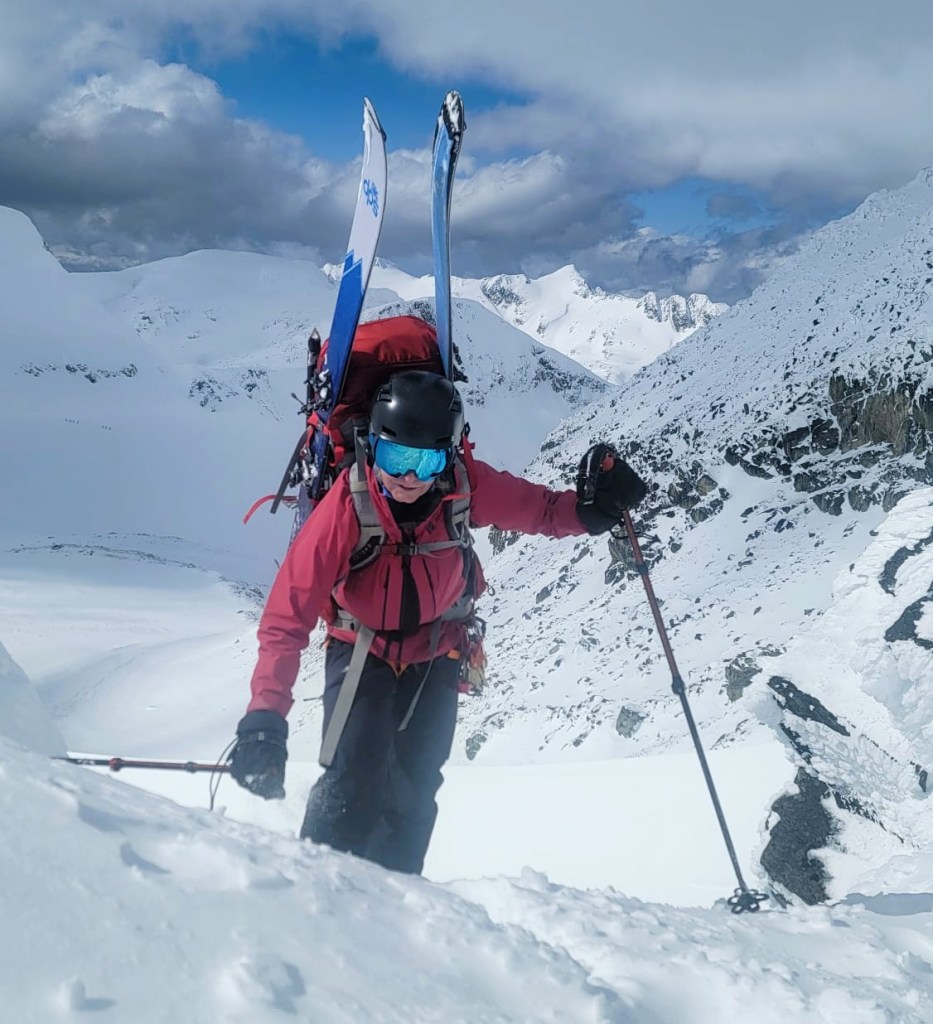
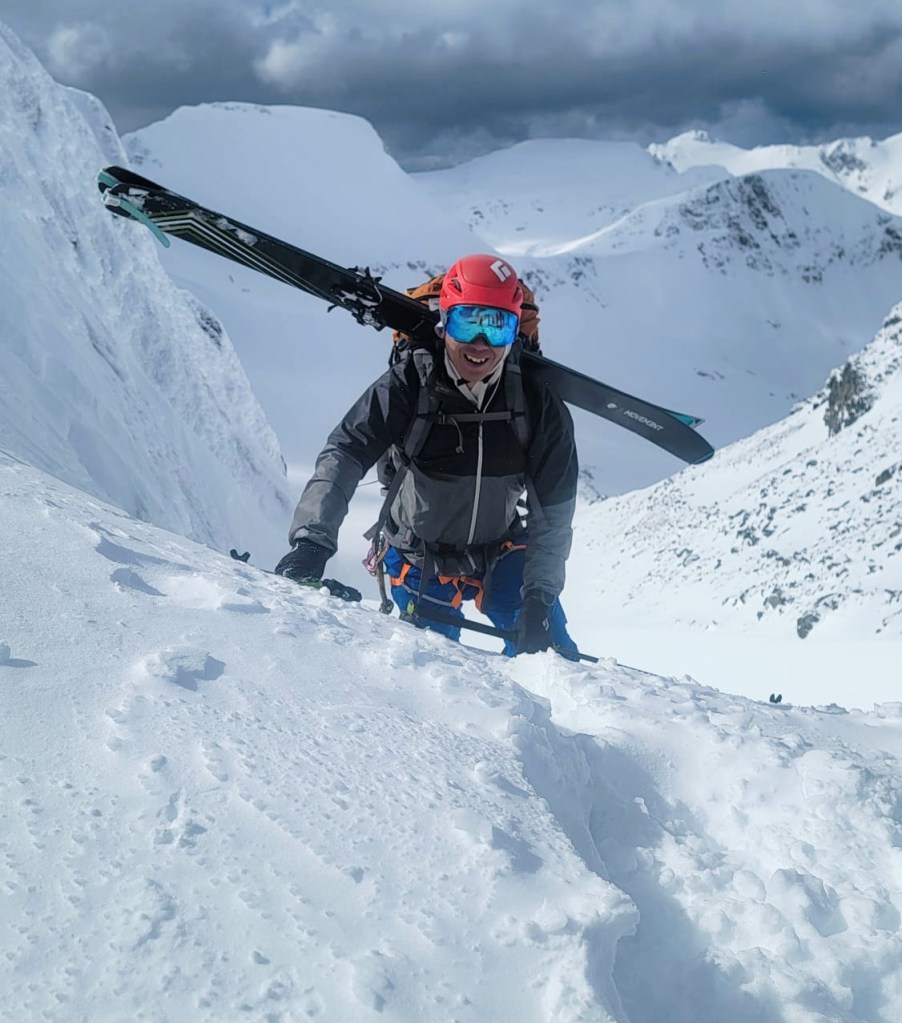
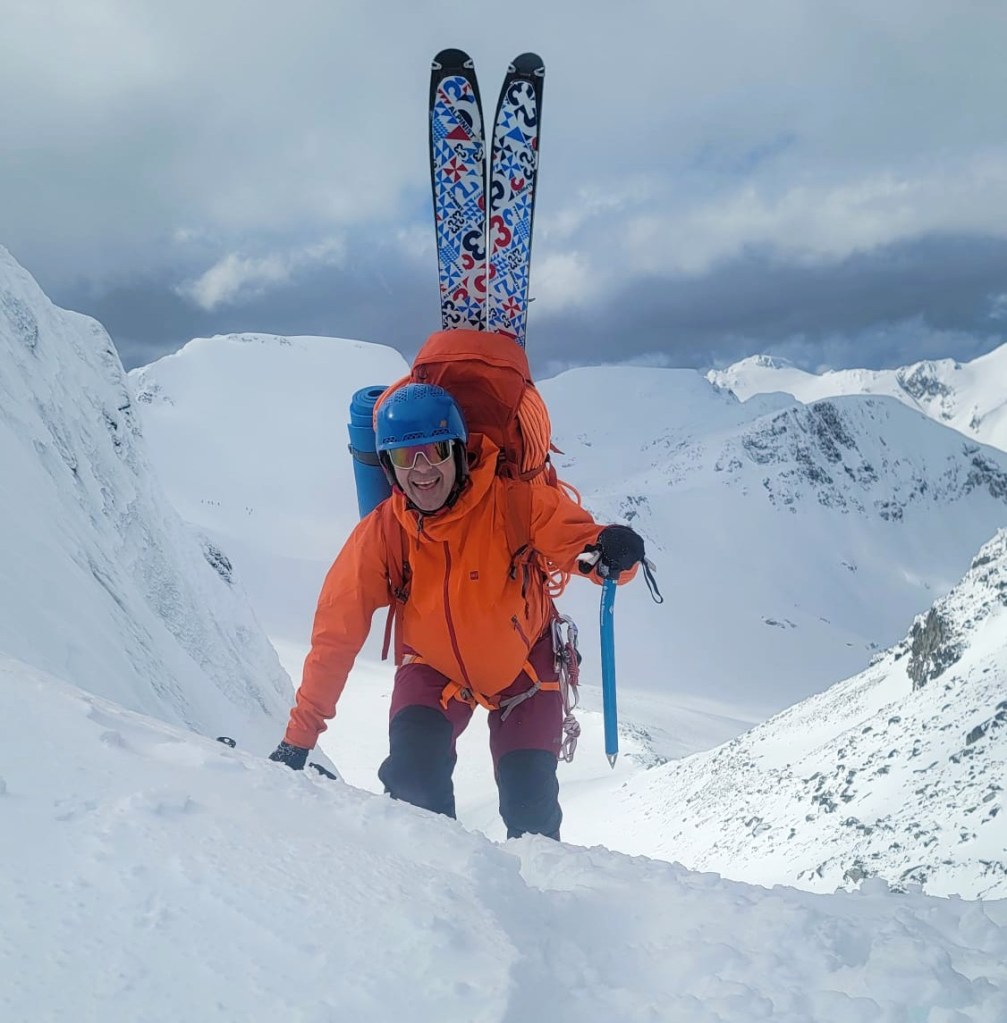
Mike went up first, and just as he popped over the top, the other Spearhead group we spied earlier was there. They were trying to do the Spearhead in a day, but were moving too slowly to get it done. They turned around and headed for home. So we were not the only ones to have our plans thwarted.
Transition #6 was ripping skins to ski down the steep backside of Mount Pattison. We hit hard-packed snow and ice near the top, which is disconcerting when wearing powder skis and an enormous pack. Near the base, we started to contour across the Tremor Glacier. Callum memorized Google Maps and wanted to avoid some crevasses which were higher up on the right. So we took a lower line.
Transition #7 was putting the skins back on to ski up to the Tremor Mountain col. The photos really do not do this route justice. It doesn’t look very steep at all. It is. We had ice and wind affected snow on the left, and some glacier terrain issues on the right. This meant we had a very narrow skin track, with steep kick-turns. My skins are excellent, and I have great kick turn technique, but there is nothing worse than feeling your skins start to slip in the middle of a kick-turn. A few whimpers might have escaped me.
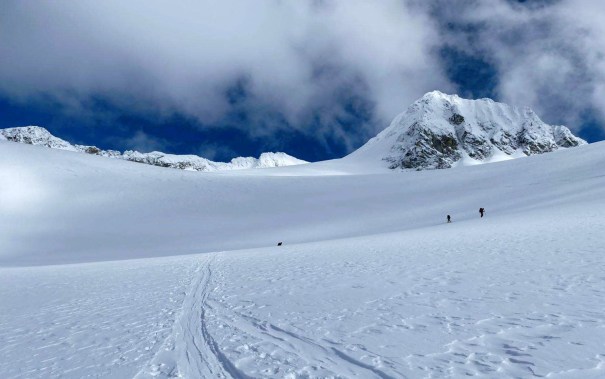
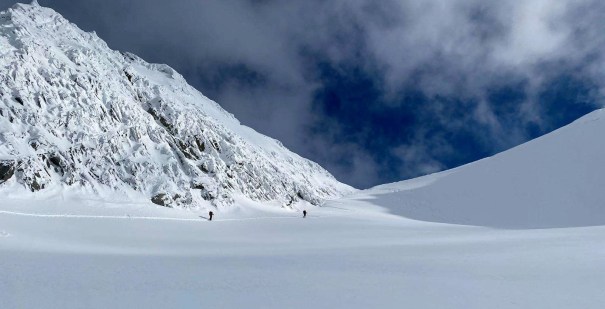
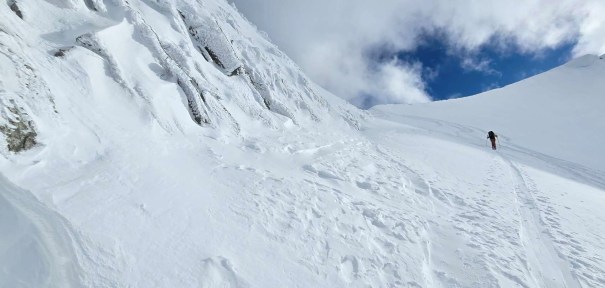
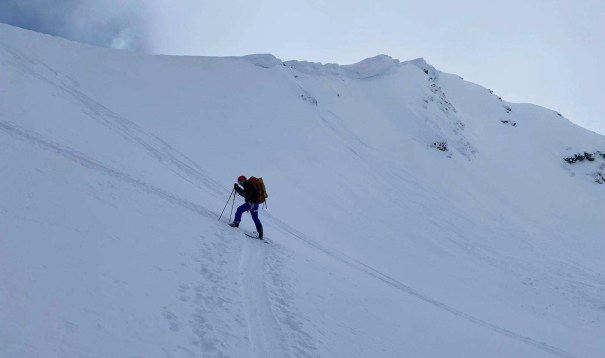
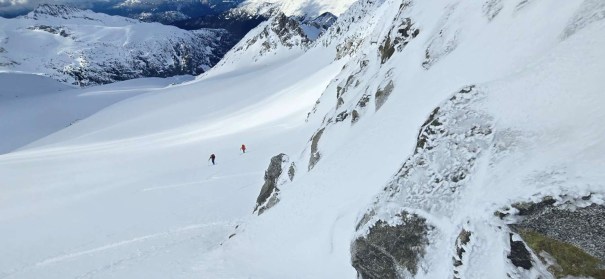
At the top of the Tremor col was the high point of the traverse. While there was still lots of elevation to gain (and lose!) to complete the traverse, this was the highest point we would have to ascend. This was good news for Brian, who lives at sea level.
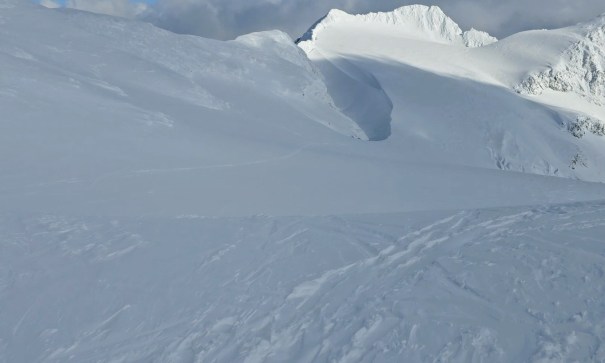
Transition #8 was ripping the skins to ski down from the col, heading towards Platform Glacier. From here, we had a great view of the “Wind Scoop” at the low point, where some people camp. We found a feature just below the col that provided a slight snow wall, and hopefully some reprieve from the wind. Wishful thinking!
Winter Camping
We found a place to camp around 6:00 pm. We had been skiing for 7 hours and 33 minutes, with 1,288 m elevation gain, and 1,017 m descent. But that was just from the start of the Blackcomb Glacier. We had been up and moving since 6:00 am. This time and distance didn’t include the walk from the parking lot, or the first boot pack. My point is, we were all pretty tired. My legs and lungs felt great, but I was tired.
In my daydreaming, I thought we would pull into camp around 4:00 pm, and enjoy some soup in the bright sunshine, with no wind. We would take an hour or so to dig out an ideal platform for our tents, and then chat around the stoves while we enjoyed our dinner.
Ha! Instead, we immediately dropped the packs, and frantically started digging out a pad for our tent. The wind was insanely cold, and we would freeze in a matter of hours if we didn’t get this done quickly. Callum and Brian had opted for bivy sacs, so they dug their own holes.
Mike and I got the tent up, and blew up our brand new WindQuester Horizon X four season sleeping pads with insane thermal ratings of R7.5 and R8.5. These pads really saved us. Brian and Callum used regular sleeping pads with another foam pad. We were very happy with the WindQuester pads, and no foam pad underneath. The weight savings was worth it.
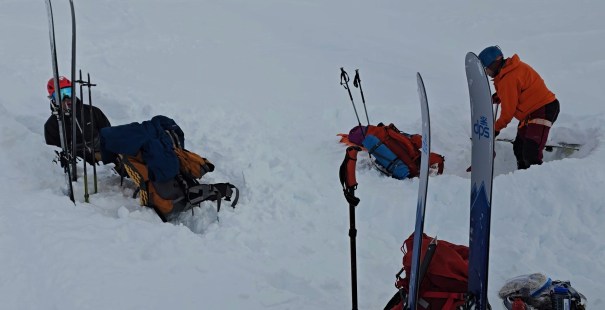
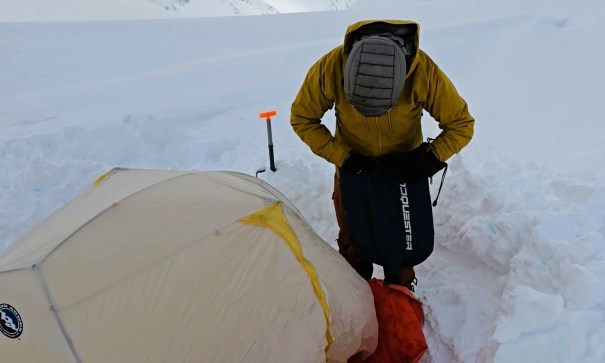
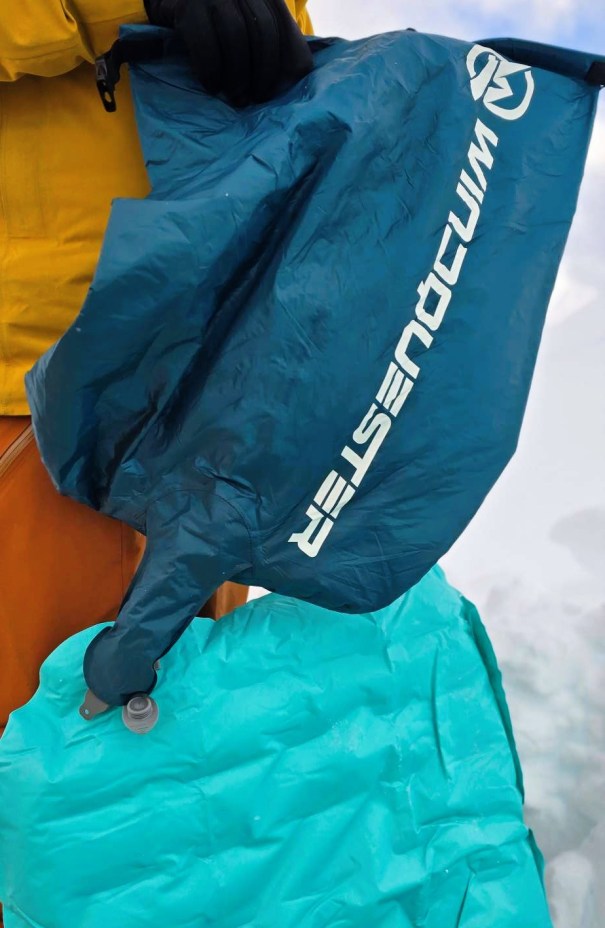
I got the cushy job of hopping inside the tent to organize our sleeping bags, and figured out where to put our gear. Meanwhile, Mike stayed outside to dig a pit for the stoves and set them up. We brought two MSR WhisperLite stoves, two bottles of white gas (doesn’t freeze), and two pots to melt snow and boil water. We used our avalanche shovels to hold the stoves, and were fully prepared to buy new shovels if we ruined them. Guess what? Zero issues. Thankfully we also brought foil surrounds, to protect the flame from the wind. Despite having dug down a pit for cooking, the wind was brutal and relentless.
We got enough water boiled for noodle soup, and to re-hydrate our dinner of homemade Chili with Mac and Cheese. While we ate the soup, I melted snow and boiled another round of water for a hot water bottle. Mike was now in the tent, trying to warm up his frozen feet. I gave him the hot water bottle, and that immediately warmed him up. I had left-over electrolyte water, which I knew I wanted to drink in the morning. I poured that into the pot and boiled it up. Callum and Brian had their own stove going, so I bid them goodnight and quickly ran into the tent. It was maybe 8:00 pm, but I didn’t care. I needed out of the wind. So much for enjoying ourselves around the stove!
Spearhead Day Two
That night was cold and blustery. The wind whipped the tent fly around, and spin drift managed to get inside on Mike’s side, making his sleeping bag damp. Despite this, Mike slept quite soundly. I got up at 6:00 am to look around. It had snowed overnight, but didn’t seem too bad. Visibility was also promising. I could see across the Platform Glacier, and low cloud was just obscuring the top of Quiver Peak. I hopped back into the tent, and managed to eek out another few minutes of sleep.
By 7:30 am, everything went to pot. It started to snow again. It also snowed way more than I thought, because we heard the avalanche bombings at the resort. That was eerie when laying in a tent on the side of a mountain.
What was worse, the view was completely gone. Fog descended to ground, and visibility was down to 5 meters. Now it was time to freak out. We made the decision to pack up and bug out as soon as possible. We didn’t even boil water for breakfast.
We also made the decision to retrace our steps and return to Blackcomb Glacier. While we were a good ways along the traverse, and had already hit the highest point, there was no way to navigate unknown terrain in a complete white out. This was a tough call, but we realized immediately we made the right decision.
There are very few photos in this section. I was so cold, I couldn’t even start my watch. I was wearing two layers of long underwear, and four layers on top, including my down puffy jacket. My phone was buried in there somewhere, and I just could not waste any energy digging it out.
Day Two Totals – Downloadable Tracks and Displayed on Strava
Date: March 29th, 2026
Group: Four (Alisen, Mike, Callum and Brian)
Distance: 20.2 km
Elevation: 736 m
Time: 10 hours 30 minutes (includes all stops)


We needed GPS just to leave our campsite, and skin up to the Tremor col. We were only about 100 m down, but we were skiing blind. We were basically inside a ping pong ball, with zero definition. We couldn’t find the col entry point, yet we also couldn’t go any higher. Finally, there was a slight break in the fog, and Callum spied the entrance – he was standing right beside it!
I was now beginning to freak out. To ski down to the Tremor Glacier, there was a wind scoop on skiers right, plus some unknown glacier terrain on the left. We decided to ski our skin track, which meant stopping every other turn and checking the GPS. It was SLOW going. Worse, after about 5 or 6 turns, we uncovered a crevasse. Mike skied over it, and the snow just disappeared into this wide, but narrow depth. I skied above it, and we guided Brian and Callum around it. We must have been more to skier’s left than we thought.
At the base of the steep section, we skied over to a campsite that someone had dug out two days prior. We felt safe enough now to set up the stove, and boil some water. We ate what we could. There was no way to eat our prepared berries and granola, so breakfast was a Clif bar and some chews. I had some boiled eggs that were frozen solid. I moved them to an inside pocket, near my chest. I was able to eat them a few hours later.
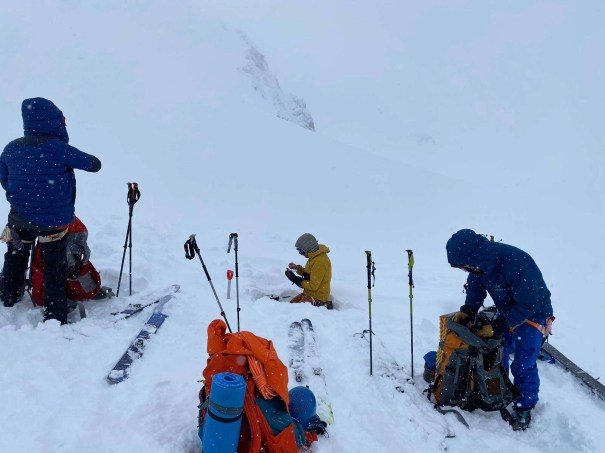
With Mike breaking trail, and Brian following behind navigating off his watch, we made it to the base of Mount Pattison. Time to climb back up there. Finding our gully in the white out was difficult. We were too far climbers left, but that was where the good snow for ascending was. Near the top it was getting icy, so we put on our ski crampons. Good thing we did. The ice got worse, and this allowed us to traverse across to the col.
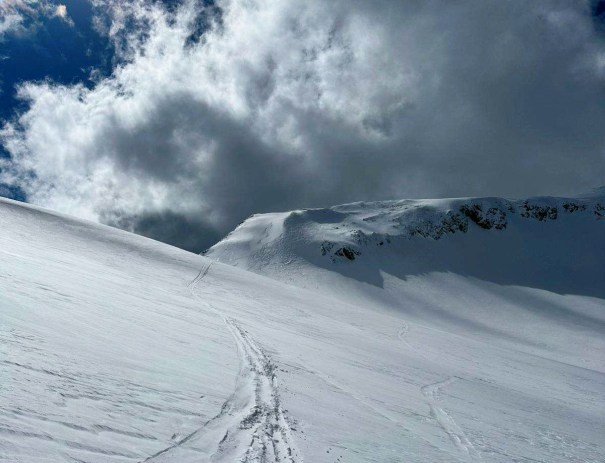
At the top of the Pattison col boot pack, Brian and Callum – our two climbers – set up the rope. We did a safety belay as we descended, just in case. Thankfully no one slipped. Brian and Callum then lowered each backpack with the skis attached.
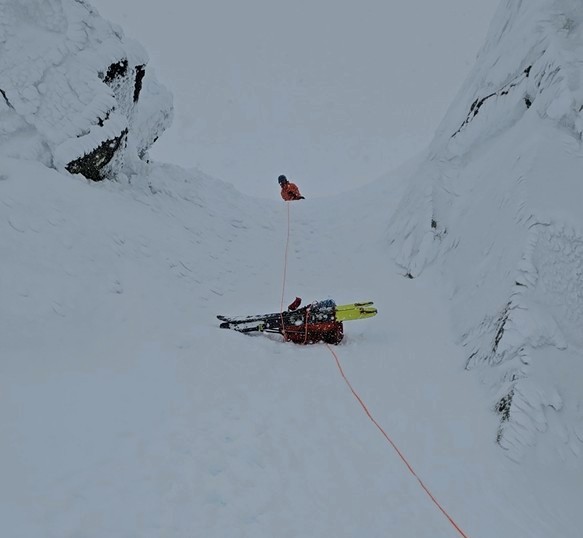
Back onto our skis, ready to ski down, and all of us drew a blank. We knew we didn’t ski straight up to the boot pack, but we could not remember what was in our way and why we skied around it. Again, to be safe, we skied down following our GPS tracks. Ugh. So slow but very safe.
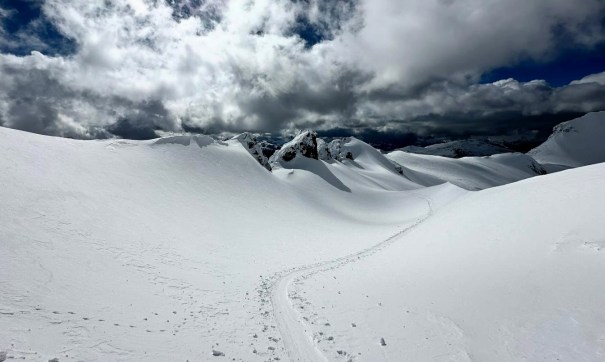
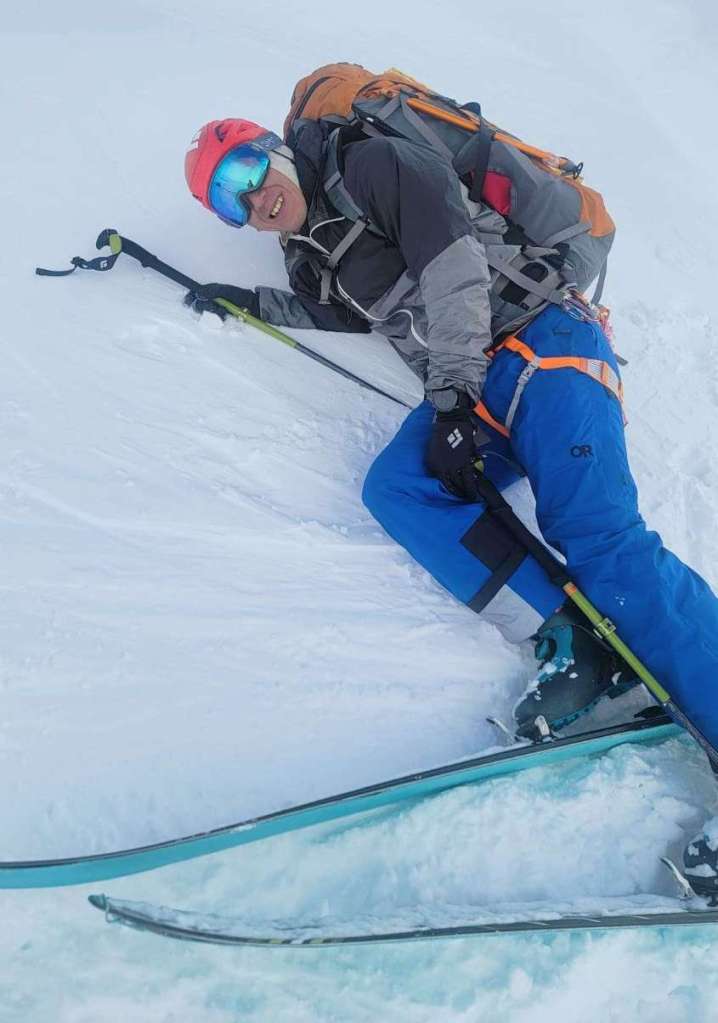
It was during these whiteout descents that all of us fell over. As we slowed down, we were convinced we had come to a stop. Not so. Vertigo kicked in, and we just listed over to the side, one after another. Very tiring to get back up for sure.
We crossed the Trorey Glacier to the base of the Decker shoulder, where we finally saw some other skiers. We met a Guide and his two clients who had just skied down from the Decker shoulder. He was very impressed that we had skied all that way in the whiteout. His group was only doing a short day, due to the weather, and would make up the difference tomorrow. We got some beta as to how to get back up to the Decker shoulder. The normal route is up the ridge line, but it was heavily corniced. With the whiteout, we couldn’t chance it. We decided to ski back up that couloir.
Mike did an amazing job of punching a trail through the deep snow. We got to the base of the couloir, and ran into trouble. It was super steep, with fresh snow on top of a thick layer of steep ice/hardpacked snow. Every step on the skis sent Mike slide-slipping down. I was terrified the snow pack would release and he’d slide the whole way down.
We decided to boot pack up the couloir. We again strapped our skis to our packs, and headed up. I don’t think I adequately described how hard this is. Just getting the pack on my back was a struggle because it was so heavy. Add in skis and skins? Ugh! Being on a super steep slope was also terrifying. My worst fear was my backpack pulling me backwards, and tumbling down the mountain. Nerve wracking! I was second in line, so I started up after Mike. The snow was so unconsolidated, that Mike’s steps disintegrated under me. I had to kick in each step several times before it would hold my weight. If this didn’t work, we were hooped. We all had dwindling energy reserves. I was so hungry, my stomach was growling. I had eaten what I could all day, but it just wasn’t enough.
Luckily, I married the strongest man alive. He boot packed to the top, dropped his pack, and then came back down. I was already 3/4 of the way up, but I was more than happy to give up my pack. At the top, all four of us collapsed in the snow, panting like dogs.
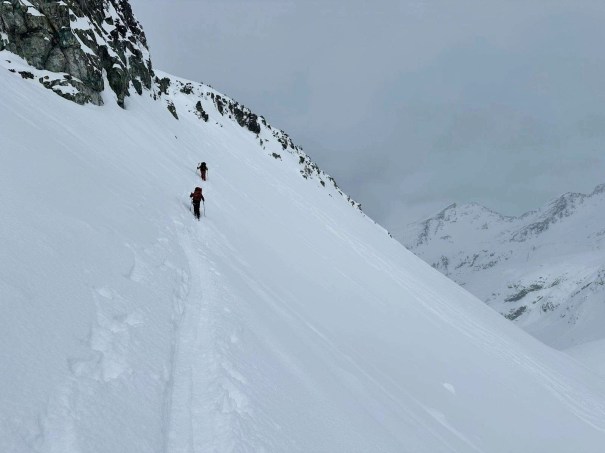
Callum was keeping track of the time. It was already 3:30 on top of Decker Shoulder. It was still snowing, but the first sucker hole was opening up. Snow was forecast to stop at 5:00 pm. Getting back down to Decker Lake was also a challenge. Why not? Again, we had to follow our skin tracks. Mike avoided skiing over some cliffs, but hit a small cornice instead. He kept it together on the other side. We had the benefit of his location, so skied higher and missed the fun.
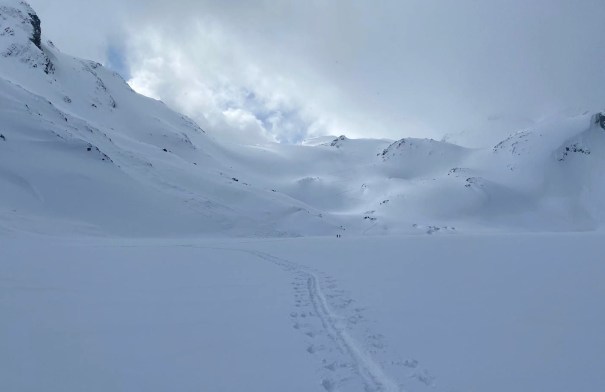
Back down on Decker Lake, I finally felt like we were going to make it out. Just one more big climb. Luckily, Brian lives in Squamish and knew a sneaky side trip called the Decker 9th Hole that cut off a huge pile of elevation gain, and avoided the icy hell that is Blackcomb Glacier. We skied through the 9th Hole Meadow, which was really pretty. The sun was finally coming out, and I actually felt hopeful. It was the first time all day that I took off my down jacket (but left on the other five layers). I also considered digging out my phone to take a picture, but decided it was just too much work.
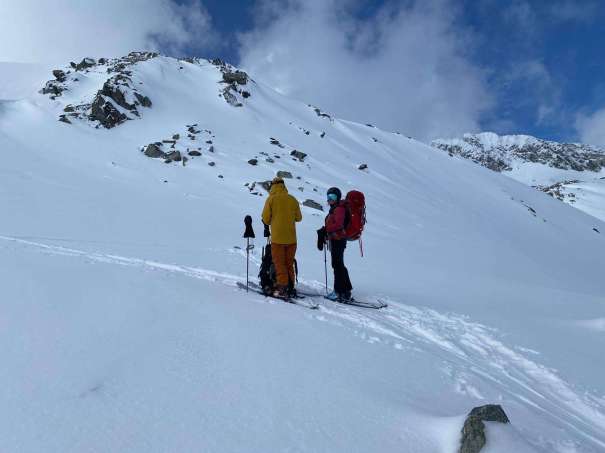
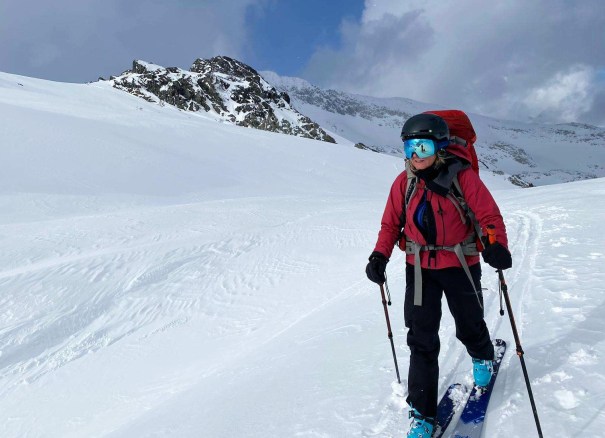
My joy didn’t last long. We did a long traverse across the southern flank of the resort, along a narrow track through the trees. One old tree decided it had enough of us skiers. It reached out and grabbed my backpack. I was hauled back so hard, that my skis actually flipped up into the air, and I landed straight back on my pack. It was literally right out of a cartoon! I was now turtled on my back, on this narrow track. Thank goodness Mike wasn’t too far ahead. He backtracked, and undid my pack because I couldn’t get to it. Further along, the trees got me a second time. I wiped out, and lost a ski. Screw it. I took off the other ski and boot packed the rest of the way. Thankfully it was just a short section.
We were finally back to the Blackcomb resort. It was now about 6:00 pm, and it was just us and the Groomers on the hill. The previously warmed snow was now frozen into hard chunks. It took us forever to ski down these frozen Green runs. My whole body was buzzing from the constant vibrating over the frozen ice.
Mike was the only one really skiing this icy hell well, so we sent him off ahead. He skied down to the Whistler Village, dropped his skis, and then walked to the car park to pick up the vehicle. We finally got down to the Village a little after 7:00 pm. We had been on our skis for 10.5 hours! Mike brought the car around and we all collapsed into it.
Not Done Yet!
We wanted to drive to Squamish to have dinner with Brian’s wife Sarah. We soon hit a road closure from a head-on car accident. With wait times unknown, we backtracked to Whistler and ate an amazing ramen noodle dinner at Ohyama. We tried to book a hotel in Squamish, but the entire town was booked solid with the north-bound traffic not getting through. Yikes! Whistler was also booking up fast, but we managed to snag the LAST room at the Whistler Village Inn and Suites. We slept on the world’s most uncomfortable sofa beds and Murphy bed. Not a problem. Best sleep I’ve ever had.
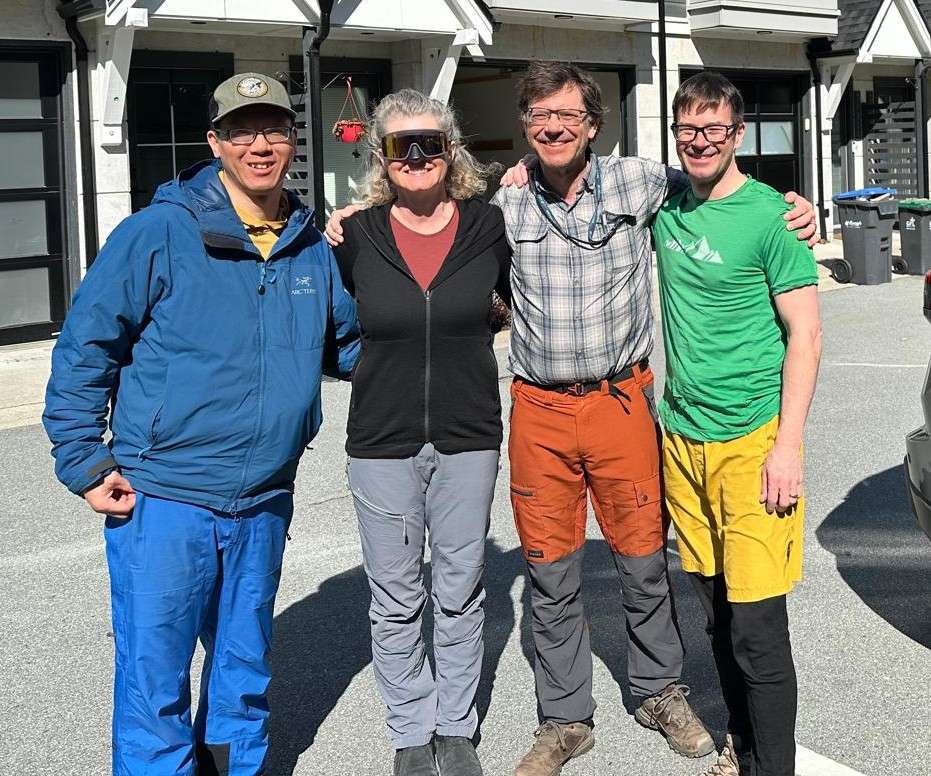
The next morning, we finally caught a break. We got up and drove to Squamish with no issues. We met Sarah for breakfast at Fergie’s Cafe. If you’ve never been, go! We went back to Brian and Sarah’s and took over their entire condo car park. We had gear, tents, skis, etc spewed everywhere as we repacked everything for the flight home.
Wrap Up
Day One was fun, and we were all feeling strong and optimistic. Route finding and trail breaking was going well. Day Two was definitely Type 2 fun, with a dash of Type 3. Type 2 fun is a full-on miserable adventure in the moment, but it becomes fun in retrospect or in the retelling. Type 3 fun involves making deals with God to come out alive. I was definitely there on two occasions. I am on Team Archangel Michael, and he’s come through for me in the past. I need to hold up my end of the bargain now, which I am so happy to do. While I am still not 100% there, I am already making plans to return to the Spearhead. I even spent a few hours today pouring over the route that was left undone. From the comfort of my living room, I am very confident we would have made it to the hut no problem in good weather and visibility…
Thanks for reading! You can follow my blog, join my FaceBook page Al’s Adventurers, or follow me on Instagram
Alisen

I love all things mountains! I live next door to the Canadian Rocky Mountains, however I travel the world to enjoy the many different mountain environments and cultures that I can. I hope you enjoy these trip reports, and that it inspires you to accomplish your own adventure goals.

 Alisen Dopf
⛷ Oh My 😉
✨🥚🐣🐇🐥🐇🐣🥚✨
Oh my goodness. What an adventure. Type 3 indeed. Even at the beginning, before everything started going wrong, I was thinking to myself: nope, this is something I’ll never do so I’m glad I can follow along virtually while you do it. Then everything went wrong and all I can say is wow. Kudos to you guys for keeping your heads on straight and making it out in those awful conditions. It sounds utterly stressful and exhausting.
Watched the video and commented. Go you. 😀
Sorry to hear that the conditions weren’t ideal. Sounds intense given the extreme winds on the first day followed by all that snow. Glad you managed to make it back and snag the last room at the Whistler Village Inn and Suites. You must have been exhausted by the end of it! I couldn’t help but laugh that you’re already making plans to return. The conditions can only get better, right!?